Character and Citizenship Education
Find out how Cedar Primary builds values, character and citizenship in students through a holistic CCE curriculum covering mental health, cyberwellness, family education, and more.
Character and Citizenship Education
Our Vision: A resilient and responsible community with a heart to care for self and others.
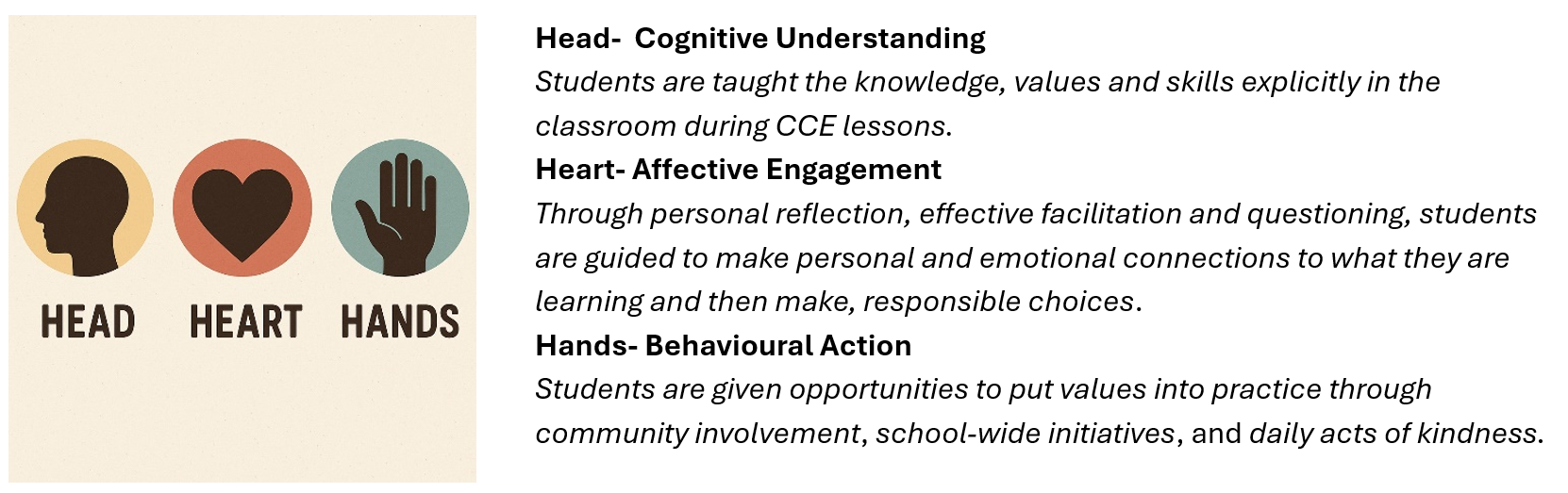
Our Mission: To instil values and build the character of Cedarians, engaging them in their heads, hearts and hands so that they can be active contributors to society.
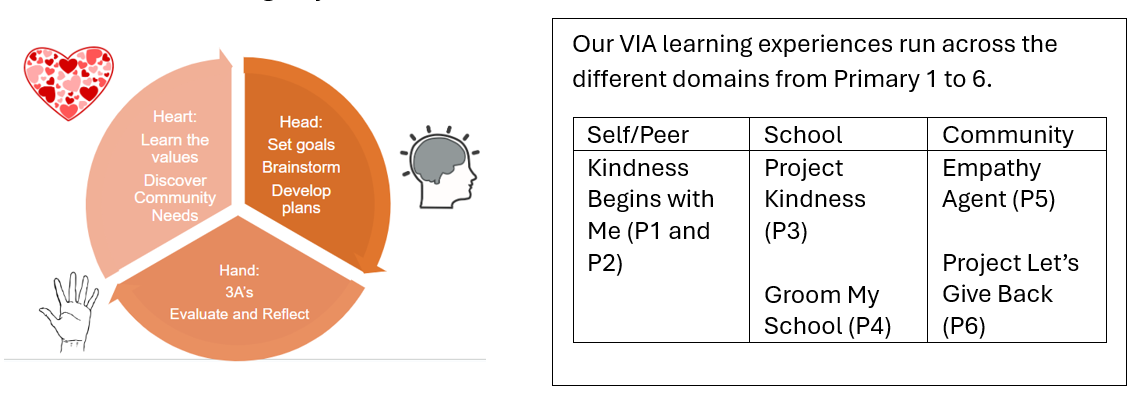
Our Approach: Engaging the Head, Motivating the Heart, Involving the Hands
The CCE Curriculum Framework
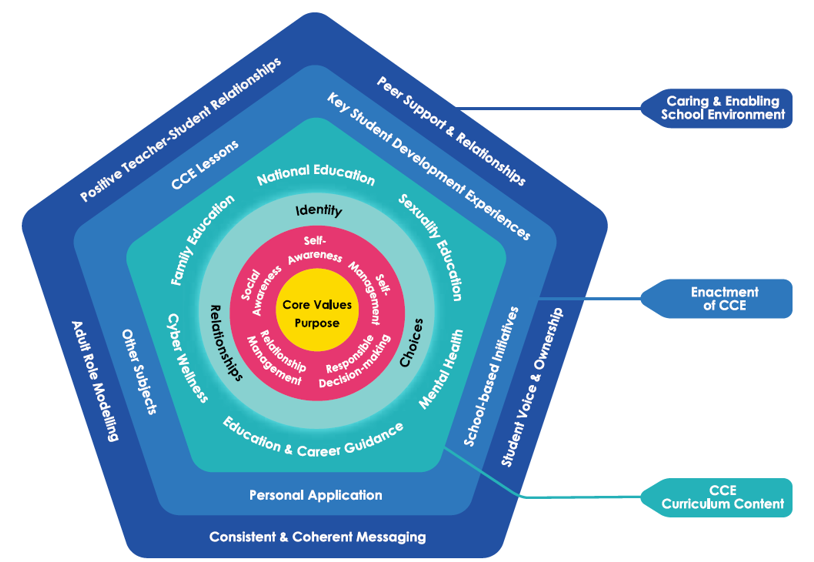
The CCE 2021 Curriculum Frame spells out the three key elements of CCE. They are :
CCE Curriculum Content
a) National Education (NE)
NE provides opportunities for our students to explore and examine their identity as Singaporeans and arrive at a common set of ideals and values. The following table shows the key dispositions for citizenship in Singapore which shapes the purpose and approach to NE:
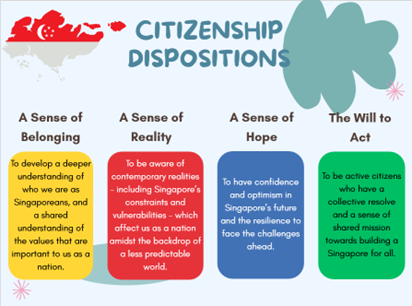
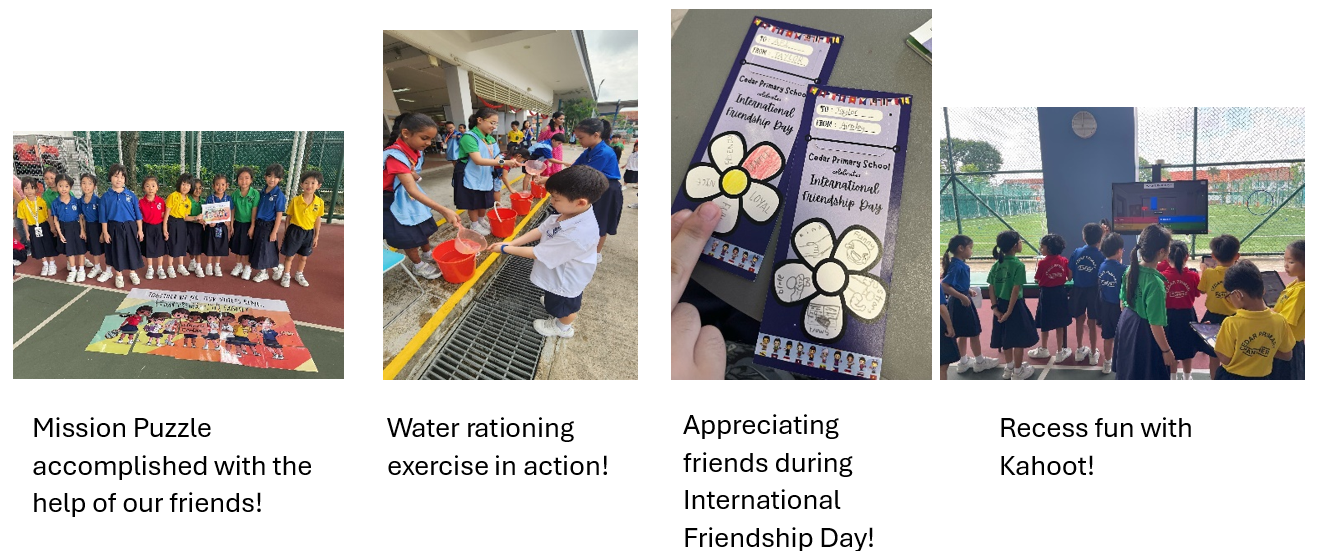
In Cedar Primary, we commemorate the 4 NE Events- Total Defence Day, International Friendship Day, Racial Harmony Day and National Day. For each of these events, we use the Head, Heart and Hands approach to create meaningful experiences for our students. Lessons are taught explicitly in class during the CCE (FTGP) lessons and exciting activities are organised during recess to provide for hands-on learning opportunities.
b) Sexuality Education
Sexuality Education in schools is about enabling students to understand the physiological, social and emotional changes they experience as they mature, develop healthy and rewarding relationships including those with members of the opposite sex, and make wise, informed, and responsible decisions on sexuality matters.
The Sexuality Education lessons are for Primary 5 and 6 students are carried out during CCE (FTGP).
c) Mental Health
Mental Health is taught explicitly in CCE Topics like:
i) Strengthening resilience and well-being (e.g. having a growth mindset, positive self-talk)
ii) Differentiating between stress and distress(e.g. managing stress)
iii) Enhancing help-seeking behaviour (infused into various lessons)
iv) Showing care and empathy to others (e.g. caring for family, friends, the community)
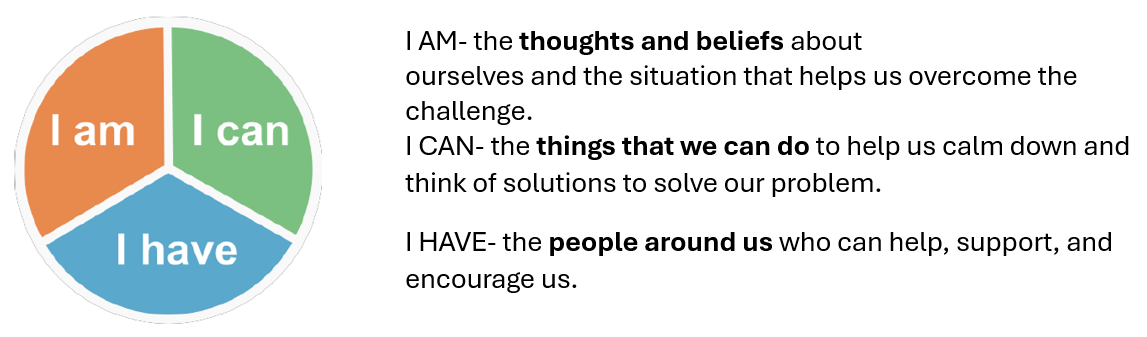
In Cedar Primary, we use a strength-based approach of ‘I Am, I Can, I Have’ that students can refer to when they are going through challenges.
d) Education and Career Guidance (ECG)
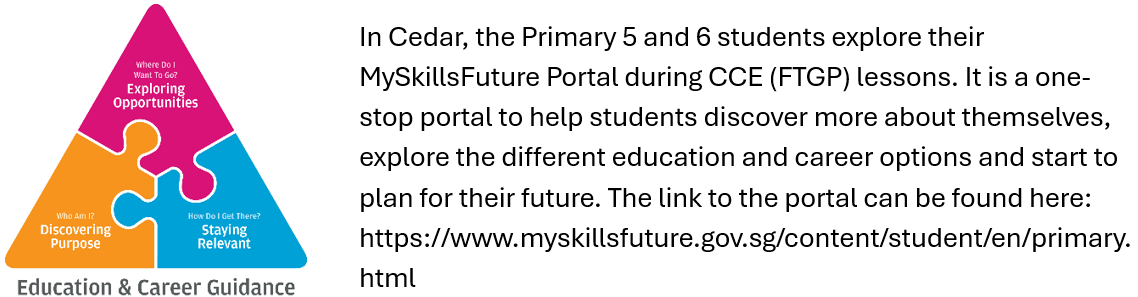
ECG enables students to develop a sense of purpose in life. By nurturing self-awareness and self-directedness for lifelong learning, ECG helps students to develop a growth mindset, adaptability and a resilient attitude to embrace future opportunities and appreciate the value of all occupations. The goals of ECG are captured in the picture below.
e) Cyber wellness
Cyber wellness in CCE focuses on the positive and psychological well-being of students as they navigate the digital world. It involves an understanding of the norms of responsible behaviour regarding technology use as well as knowledge, skills, values and attitudes on how to protect oneself and other users in the cyber space.
Cyber wellness lessons are covered during CCE (FTGP) lessons across Primary 1 to Primary 6 and they include lessons from these five main domains:
i) Cyber Use
ii) Cyber Identity
iii) Cyber Relationships
iv) Cyber Citizenship
v) Cyber Ethics
f) Family Education
Family education in CCE focuses on the teaching and learning of skills to strengthen relationships. Topics are differentiated across the different levels. In the lower primary, topics include positive relationships at home. In the middle primary, the students learn about the importance of families and in the upper primary, they learn about family roles and functions.
Enactment of CCE
a) CCE Lessons
Classroom lessons for CCE provide dedicated curriculum time for the explicit teaching and learning of values and social emotional competencies, as well as engaging and building relationships with our students. CCE lessons in primary schools comprise of the following:
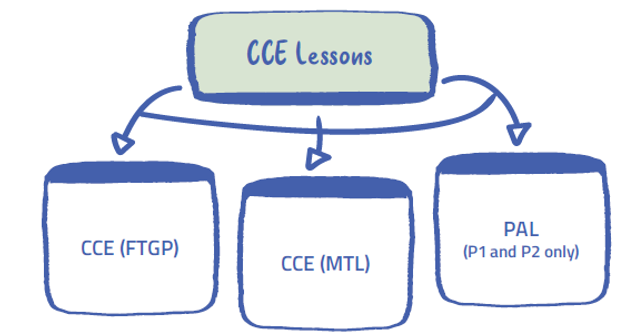
CCE (Form Teacher Guidance Period), CCE (Mother Tongue Language) and PAL( Programme for Active Learning). These lessons have been planned and developed in alignment with CCE Learning Outcomes with different contexts applied in each lesson. This facilitates deeper learning and students’ application of the knowledge and skills in various situations.
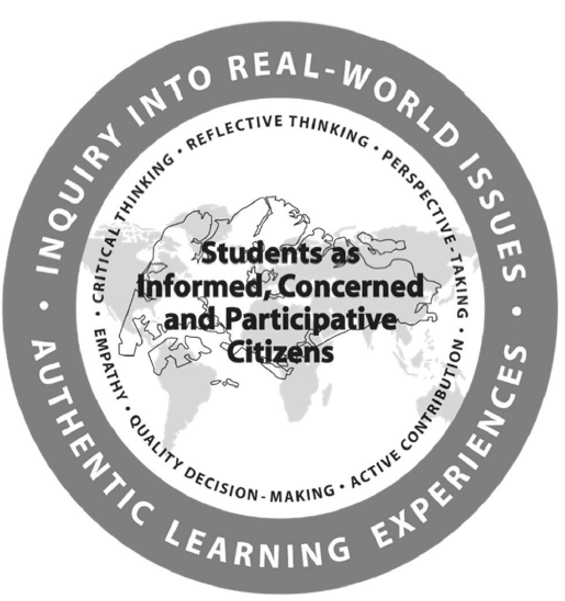
The Social Studies curriculum complements the CCE curriculum in nurturing citizenship dispositions. Through Social Studies lessons, students deepen and broaden their understanding of what it means to be a citizen of a country and the world by learning key concepts and skills drawn from Humanities subjects like Geography, History and Sociology. The goals of the Social Studies curriculum are shown in the picture below:
b) Key Student Development Experiences
Student development experiences are programmes and activities that contribute towards the holistic development of our students in physical, aesthetic, intellectual, moral and social domains.
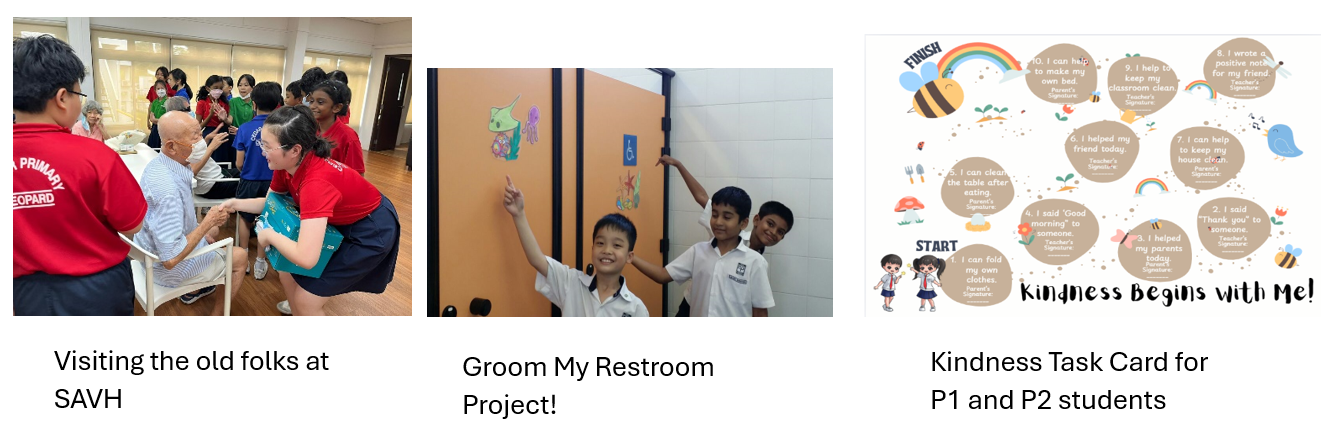
Values in Action (VIA)
In Cedar Primary, the objectives of our VIA initiatives are as follows:
· To nurture Cedarians to be socially responsible citizens who contribute meaningfully to the community, through the learning and application of values, knowledge and skills.
· To engender student ownership and initiative.
· To reflect on experience, the values Cedarians have put into practice, and how they can continue to contribute meaningfully.
Cohort Learning Journeys
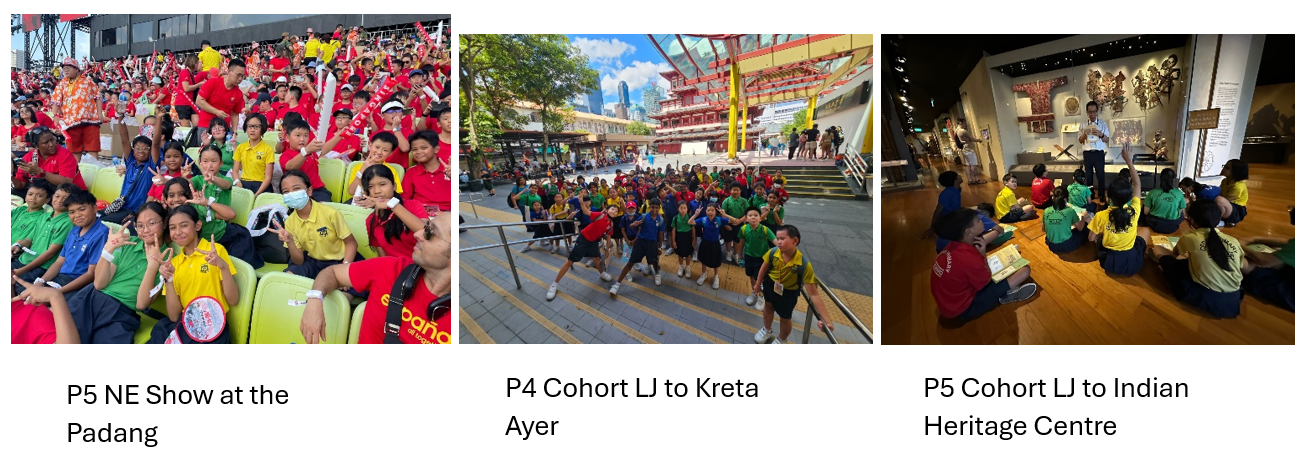
Cohort LJs provide Primary 4 to 6 students with opportunities to take part in common experiences:
1) Primary 4 Museum Based Learning (MBL) (Art) at the National Gallery Singapore
2) MBL (CCE and Social Studies field-based learning) at various museums and heritage institutions allow students to understand the history and heritage of Singapore and the region and appreciate the contributions by the ethnic communities:
a) Primary 3 students to visit Geylang Serai Heritage Gallery
b) Primary 4 students to visit Kreta Ayer Heritage Gallery
c) Primary 5 students to visit Indian Heritage Centre (from 2022)
d) Primary 6 students to visit the Asian Civilisations Museum.
3) The Primary 5 NE Show is a preview of the National Day Parade. Through this Cohort LJ, students learn to appreciate the significance of National Day.
Caring and Enabling School Environment
The quality of the learning environment shapes how students perceive and experience CCE Lessons and Student Development Experiences. A caring and enabling school environment for learning is one where students perceive that both teachers and peers care about their well-being and learning, and students show care and support to one another.
A caring and enabling school environment for learning enables students to:
• develop a growth mindset and self-discipline.
• learn to overcome challenges.
• sense make
• take ownership of their class and school community; and
• be motivated and empowered to master the CCE Learning Outcomes.
Teachers can provide a caring and enabling learning environment by nurturing a sense of belonging, guiding students to appreciate diversity, empowering them to be active learners and monitoring and supporting their well-being proactively.
